
From Global Crisis to Local Ownership: Navigating Our Climate Future
A blog post following my recent carbon literacy training reflecting on climate change and local action
12/9/20253 min read
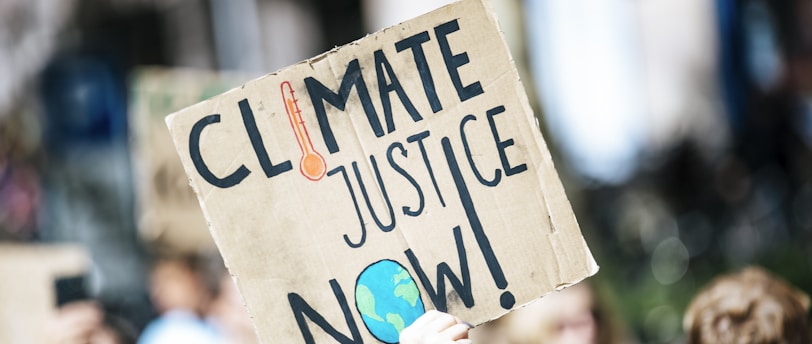

Having recently attended a local Carbon Literacy course, it got me thinking about how we can best navigate the climate crisis. 2024 was a wake-up call, being the first year to breach the critical 1.5°C threshold established by the Paris Agreement, with average temperatures reaching an estimated 1.6°C above pre-industrial levels.
It’s easy to feel overwhelmed by numbers like that. But the narrative isn't just about rising temperatures, it's about rising agency. From the Climate Action Network to the 1,200 Carbon Literacy learners active since June 2025, a shift is happening. We are moving from anxiety to ownership, and from global worry to local action.
To act effectively, we first need to understand what the greatest contributors to climate change are. In terms of CO₂, the greatest emissions are primarily from transport, burning gas and coal, deforestation (changing land use), and the production of cement and concrete. In terms of methane, cattle farming, food waste, mining, and melting permafrost (including drained peatlands) are the biggest contributors.
If we look at things from a waste management perspective specifically, compulsory collection of food waste from households can’t come soon enough. If "food waste" were a country, it would be the third-largest emitter in the world, right behind the USA and China.
We aren’t just talking about breaching the Paris Agreement threshold, the impact of climate change is already here. As things are heating up, the impacts are felt worldwide, including:
An increase in extreme weather events.
An increase in heat-related deaths.
More frequent crop failures threatening food security.
Volatility in water security.
Climate refugees where people are forced to move from their homes as a result of climate change.
Climate change is not a great equaliser; it is a great multiplier of inequality. Vulnerable communities, and in particular minorities, are disproportionately affected as they face greater exposure to climate risks, more barriers to support, and lower representation in the decision-making processes where policy is written. In addition, we are seeing the beginning of a need for "climate reparations" to hold countries, principally those in the Global North, ethically, morally, and financially responsible for the historical emissions they have generated which are having a disproportionate impact on the Global South. This inequality continues to exists in the emissions themselves, with an ongoing stark divide in responsibility:
· The top 1% of earners create a significantly larger carbon footprint than the rest of the population, and research indicates the richest 1% of the global population are responsible for more carbon emissions than the poorest 66% combined.
The cost of living crisis and the climate crisis share the same root cause: our reliance on volatile fossil fuels.
Climate justice means fair access: we need to lower the bar for entry so that green tools (like renewables and efficiency upgrades) aren't just for the wealthy.
With that in mind, what can be done at a local level to reduce carbon emissions?
Food: Choices matter. Producing 100g of beef, for example, creates 9.9 kg of CO2e, vastly higher than plant-based proteins.
Goods: Simply buying less is one of the most powerful actions you can take.
Water: Installing water-saving devices, repairing leaks and reusing grey water.
Finance: Look at "Green Banking." Where is your pension invested? Initiatives like "Mother Trees" banking are trying to shift finance away from fossil fuels.
As well as carbon footprint, there is the growing concept of a “carbon handprint”, the positive steps which can be taken to counteract the impact of one’s carbon footprint, or put another way, community actions to reduce climate change. However, widespread participation is required and changing social norms doesn't happen overnight; it happens one conversation and one pledge at a time.
As I conclude this focus on climate and reflect on my learnings from the carbon literacy training, and the pledge I need to make to become “Carbon Literate”, is there a single pledge you could make to reduce your own carbon footprint? This shouldn't be a vague promise, but a new and significant action you have not taken before. Whether it is lobbying for renewable requirements in new local builds, switching your bank, or joining a community garden, your agency matters. What will your pledge be?
Victoria Crawford Consulting
Expert support in waste and resource management solutions.
Contact
victoria@victoriacrawfordconsulting.co.uk
© 2025. All rights reserved.