
England’s Waste & Resources Reforms: What 2026 Means for Households, Businesses, and Local Authorities
Policy reforms for recycling in 2026
3/27/20265 min read


2026 marks one of the most significant years in England’s journey toward a circular economy since the announcement of the Resources and Waste Strategy in 2018. After years of policy development and sector‑wide debate, the country is now entering the delivery phase of the waste and resources reforms outlined in the national Resources and Waste Strategy.
For many organisations and local authorities, these changes bring both opportunity and challenge. As for households, for some it will be status quo and for others it brings a fundamental shift in how recycling is understood and carried out.
In this blog, I break down what’s changing, why it matters, and the key issues everyone needs to be aware of.
A Landmark Year: Where We Are Now
The long-awaited reforms are finally moving from planning into implementation.
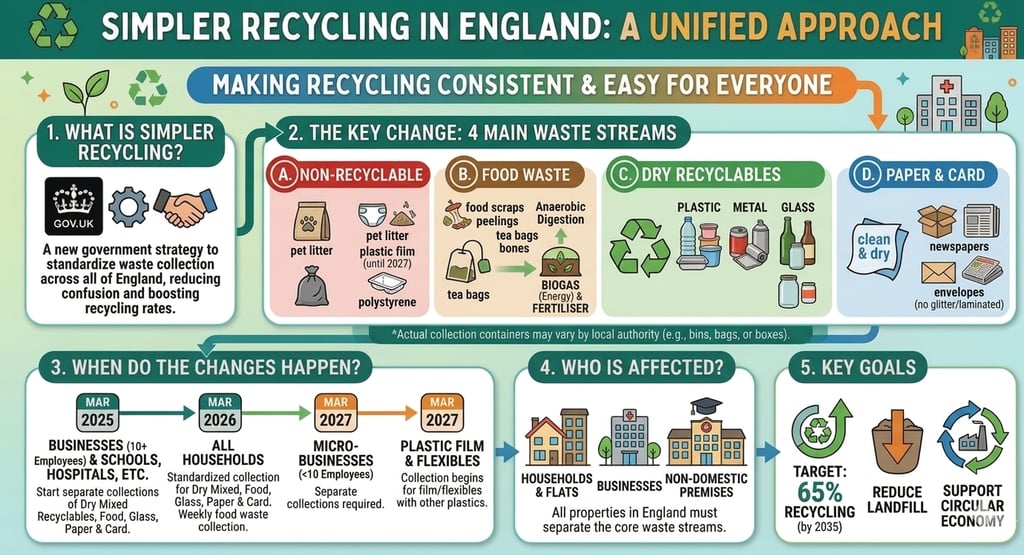
31 March 2026 ushers in Simpler Recycling, a move designed to standardise household recycling across England. This marks the end of the confusing “postcode lottery” system where residents in different regions faced wildly different recycling rules.
These reforms sit within the wider ambition of achieving a circular economy and eliminating avoidable waste by 2050.
Businesses entered mandatory recycling separation in 2025, with microbusinesses scheduled to follow in 2027. The momentum is now undeniably accelerating although there are still some gaps in how compliance with these requirements for businesses is enforced.
Simpler Recycling: What’s Changing?
Under the new rules, all councils must collect the same core materials from households:
Food waste
Garden waste (potentially chargeable)
Paper & card
Glass, metal & plastic — including cartons
Residual waste
This is a default minimum standard that has applied to workplaces with over 10 employees since March last year.
By introducing consistent national material streams, the government aims to:
✅ End household confusion
✅ Improve material quality
✅ Reduce contamination
✅ Support better downstream recycling infrastructure
This is one of the most widely welcomed aspects of the reforms but it’s not without its complications.
Simpler Recycling: The Challenges Ahead
While the policy intention is strong, real-world implementation raises several concerns:
1. Accessibility for High-Density Housing
Flats and HMOs often lack space for multiple bins, and the system design may not fully reflect this reality. Even with options for on-street bulk containers, these have raised concerns due to loss of parking spaces and accessibility issues.
2. Street-Level Aesthetics and Storage
More containers could lead to overcrowded pavements, blocked access, and neighbourhood frustrations. An issue with no simple answer and one which frequently attracts the attention of tabloid media and the public.
3. Fit for Purpose?
Questions remain about whether the system truly works for residents in constrained environments. There have been reports of residents returning caddies to their council where they feel it’s an unnecessary additional burden placed on the public.
4. Misinformation and Public Confidence
Recent tabloid stories have fuelled misinformation about compliance with the new recycling requirements, including claims of £400 fines to residents who do not comply, which DEFRA has had to refute. This risks leading to confusion and distrust, despite lacking accuracy.
5. Logistics and Supply Challenges
Local authorities face shortages in vehicles and food‑waste containers, plus delays caused by long-standing waste contracts (some lasting up to a decade beyond the implementation date). This means that whilst the majority of residents will receive the full range of recycling services in 2026, there are still a significant number who do not have food waste collections and/or cannot present the full range of dry recyclables for collection at the kerbside.
6. The Kerbside-Sort vs Co-Mingled Debate
This longstanding industry tension persists as councils weigh quality, cost, and operational practicality. The reality means that whilst all residents will (eventually) be able to present the same range of materials for collection, the requirements for how these are presented differs significantly around the country. This is felt by some to be an unwelcome watering down of the original proposals for consistent collections.
Extended Producer Responsibility (EPR): The System Behind the System
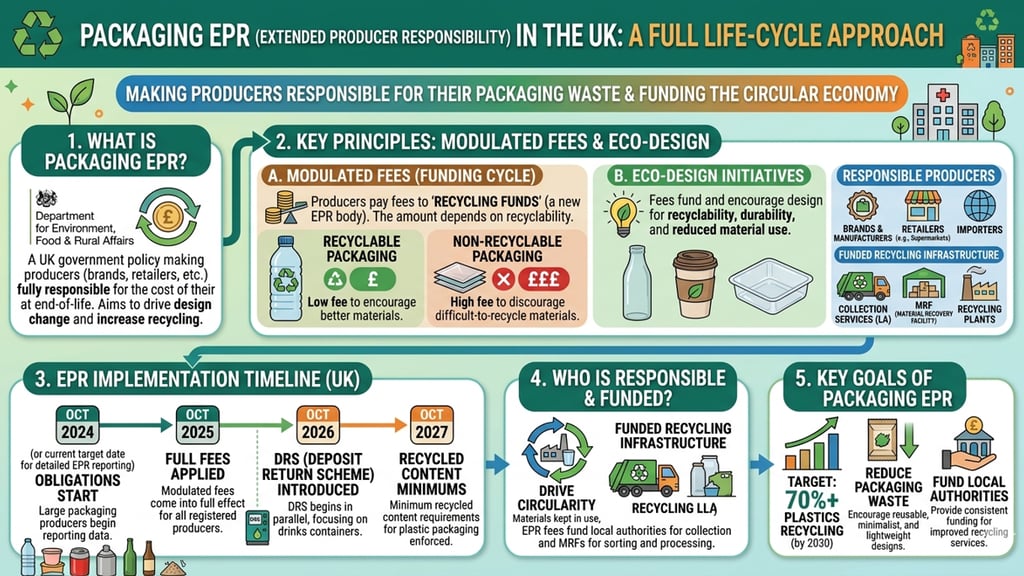
EPR underpins Simpler Recycling by reshaping the financial foundations of packaging waste.
Key principles include:
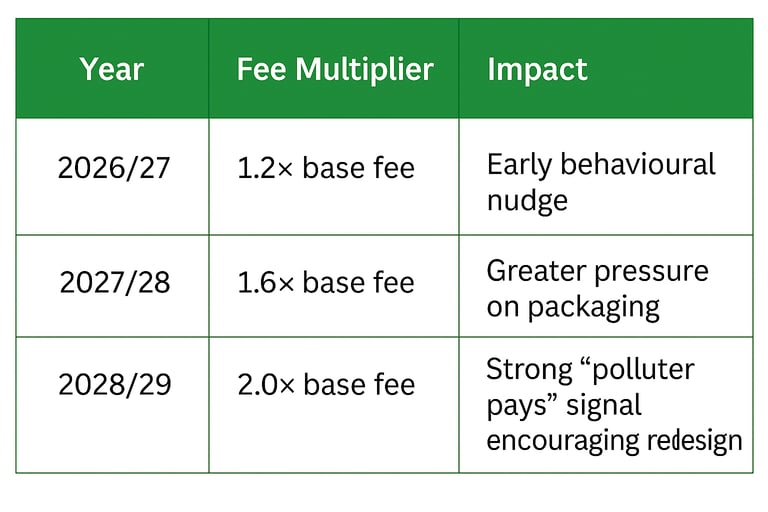
Modulated fees that incentivise recyclable packaging design
Financial contributions from producers to fund the net cost of local authority collections and treatment of packaging waste
Clearer eco‑design expectation
However, litter‑focused EPR remains delayed with no confirmed update.
The fees increase over the coming years, shown below for the packaging materials classed as the most difficult to recycle.
EPR: Key Issues to Watch
1. The “Stealth Tax” Narrative
Some argue EPR costs will pass directly to consumers, worsening inflationary pressures and increasing the cost of living.
2. The Glass Penalty
Heavy yet highly recyclable glass may become disadvantaged by weight‑based fee models, potentially incentivising less sustainable composites (for example light-weight pouches). Whilst the original fees were rebased in attempt to correct this, the glass market does not believe that this goes far enough.
3. Administrative Complexity and Fraud Risks
With detailed reporting requirements comes an increase in scams targeting pEPR payments with fraudulent organisations targeting packaging producers in an attempt to trick them into paying them pEPR payments rather than the scheme administrator.
4. Full Net Cost of Recovery
Balancing industry contributions with the true cost of running local services remains a critical tension. The purpose of the modulated fees is to encourage eco-design and increase the recyclability of packaging. If the desired effect is achieved then this will result in a decreasing pot of money available to local authorities to cover the full net cost of recovery, unless the fees increase over time to maintain this balance.
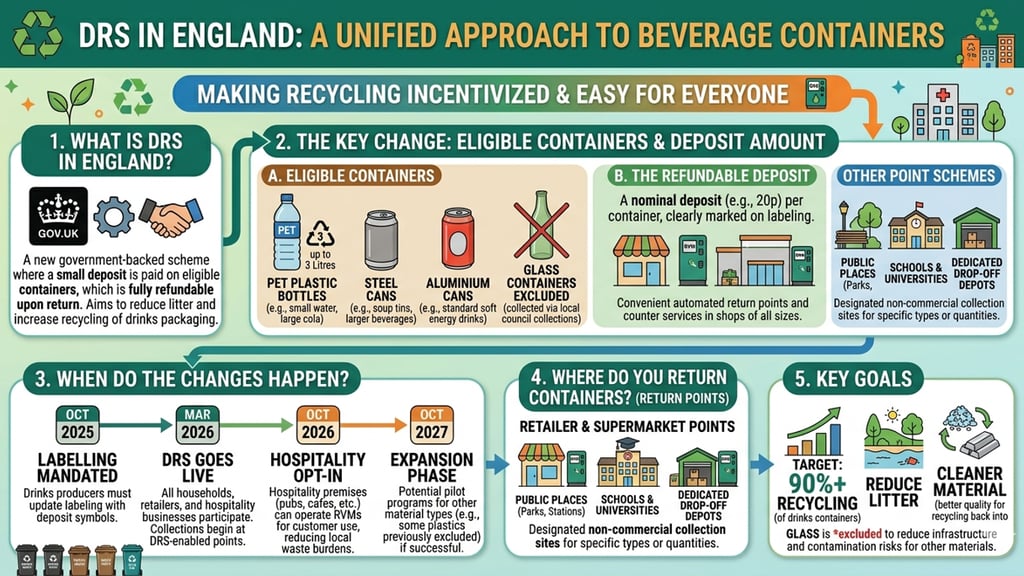
The Deposit Return Scheme (DRS): Coming in 2027
Launching October 2027, the DRS will cover PET plastic, aluminium, and steel drink containers. This will:
Capture high‑quality materials
Reduce contamination
Shift material flows away from kerbside systems
Require major operational adjustments from MRFs and councils
However, DRS is not replacing kerbside instead, it changes the role and composition of kerbside collections.
DRS: The Challenges
1. Cross-UK alignment
This remains a challenge, with systems not yet harmonised. This creates potential difficulties in the interface with systems at the borders and also opens up opportunities for fraud unless appropriate control measures are put in place. RVMs and Counting Houses will need to be able to distinguish between containers purchased in one region of the UK as opposed to another. This is especially important for glass which is out of scope in England and intended to be in-scope in Wales. A situation where glass containers are purchased in England (without a deposit) are then returned to Wales to fraudulently redeem deposits must be prevented.
2. Learning from Scotland
The collapse of the Scottish DRS and subsequent Biffa lawsuit offer a cautionary backdrop.
3. Inflationary Pressures
Combined impacts from Simpler Recycling, DRS, and EPR could drive prices higher a concern echoed across industry and retail, especially given wider global challenges impacting on inflation.
4. Small Retailer Burdens
Questions remain about responsibilities, return logistics, and the risk of theft of returned containers at small retailers who do not have an RVM.
5. Local Authority Revenue Loss
High‑value materials will be diverted from kerbside systems, reducing income for councils.
What This All Means
The next two years will be transformative:
2026 and 2027 are pivotal years with policy becoming an operational reality.
Implementation lags are expected as the vehicles, containers and infrastructure are put in place to deliver the required changes, and long-term contracts mean authorities are tied into existing arrangements.
Consumer costs may rise as reforms reshape the packaging economy.
What’s clear is that we’re entering a decisive phase that will influence England’s resource systems for decades to come.
Work With Me
I support organisations navigating the complexities of waste policy, circularity, and resource system transformation.
Victoria Crawford Consulting
Expert support in waste and resource management solutions.
Contact
victoria@victoriacrawfordconsulting.co.uk
© 2025. All rights reserved.